
HealifyNow provides some of the services discussed in this article. Our content is written to inform, and clinical decisions are always made by a licensed clinician.
It is very easy to open your medicine cabinet and take an ointment when your dog has a scratch or a cut. In some cases, this is perfectly acceptable. But in other cases, it will delay appropriate therapy or even put your dog at risk. There isn’t a universal “best” cream for all conditions.
This article provides you with information on what topical antibiotics can and cannot do for your dog, which substances should be discussed with your veterinarian, which topical creams should be avoided, how to administer them, and what symptoms require immediate veterinary intervention.
The Short Answer
- There is no one perfect antibiotic cream. It will vary based on the condition, where it is on the body, and your specific dog.
- Some conditions that seem to be bacterial infections are not actually infections at all but rather allergies, mites, fungal, foreign object, or tumor-related.
- The only time that an over-the-counter cream would be considered to be used would be for superficial scratches.
- Anything deep, dirty, infected, painful, bite wounds, eye or ear issues, and those not resolving would require a vet.
What Antibiotic Creams Do (and Don’t Do)
Topical antibiotics destroy or inhibit specific bacteria found on the skin. Topical antibiotics do not:
- treat fungal, yeast, viral, or parasitic conditions
- penetrate tissue deeper into the body or treat internal infections
- address the underlying problem causing the issue, like allergies or a foreign object in the wound
- substitute for proper cleaning or licking of the wound
Wrong use of a medication or use of one when not required can result in antibiotic resistance.
When a Topical Antibiotic May Be Appropriate
Your veterinarian may suggest a topical product for:
- Small and superficial scratches or wounds that have been cleaned and are not very deep
- Superficial skin infections, like certain types of superficial pyoderma, with a prescribed topical preparation
- Surgical wounds or wounds resulting from other surgical procedures only as directed by the surgical team
- Hot spots, which include clipping, cleansing, and may involve a prescribed treatment as part of the treatment protocol
Whether the use of a cream is recommended depends upon what the vet sees.
When to See a Vet Instead
Consult your veterinarian immediately or take your pet to an emergency veterinary hospital when:
- Deep wounds, puncture wounds, and bites (bites by cats usually get infected)6
- Bleeding heavily or the wound does not stop bleeding
- Swelling, heat, pus, foul smell, or spreading redness
- The wound is near the eyes, on the paws where the dog is limping, or on the abdomen or joint areas
- The dog has a fever, lethargy, lack of appetite, or vomiting
- The wound is worsening or does not show improvement after a couple of days
- Dirt-filled wounds
- Any eye-related problem like squinting, discharge, cloudy eyes, or red eyes
- Ear-related issues like head shaking, smell from the ear, discharge, or pain
- Urinary-related issues such as training during urination, blood in the urine, or increased frequency of urination
- Puppies, senior dogs, or ill dogs
Problems related to the eyes, ears, or urinary system require a veterinary diagnosis and proper medication. They should not be treated using a skin cream.
Ingredients to Ask Your Vet About
| Ingredient | What It Is | Things to Know |
|---|---|---|
| Bacitracin | Topical antibiotic often found in OTC ointments | Common in minor wound care, but ask your vet first. |
| Polymyxin B | Topical antibiotic, often combined with other antibiotics | Commonly included in triple antibiotic ointments. |
| Neomycin | Topical antibiotic also found in triple antibiotic ointments | Can cause allergic skin reactions in some dogs. |
| Mupirocin | Topical antibiotic | Often prescribed by veterinarians for certain skin infections. |
| Silver sulfadiazine | Antimicrobial cream | Typically used under veterinary direction, such as for burns. |
| Chlorhexidine | Antiseptic, not an antibiotic | Used in cleansers and washes; veterinarians recommend appropriate products and dilutions. |
Over-the-counter “triple antibiotic” ointments for people are sometimes used on small, shallow dog scrapes, but they aren’t made for dogs, and the safest approach is to ask your vet whether it’s right for your dog.
Products and Ingredients to Avoid
- Steroid-containing creams (hydrocortisone) without a vet’s approval. They may interfere with healing and make infections worse.
- Topical medicines containing any additional ingredients like “pain relief” or “with” varieties, without a vet’s approval
- Medications containing zinc oxide, including those for diaper rash, because they are potentially poisonous when ingested
- Essential oils, for example tea tree oil, which are potentially poisonous to dogs
- Use of hydrogen peroxide or rubbing alcohol on skin wounds, as it may be caustic
- Unfinished prescriptions from someone else’s animal or person
- Eyes and ears medications used on skin, and skin creams used on eyes and ears
- Human medications that have not been approved by a vet
If the label of the medication warns against using it on pets, trust it.
How to Care for a Minor Wound

For a small, superficial wound, and after consulting with your veterinarian for peace of mind:
- Stay calm and secure your dog. An injured animal is more likely to bite, so be prepared.
- Wear gloves and wash your hands.
- Stop the bleeding by applying gentle pressure with clean gauze.
- Trim the fur around the wound if required so that you can see it and maintain hygiene.
- Rinse gently with clean, lukewarm water or sterile saline solution to wash off any dirt.
- Dry gently with clean gauze.
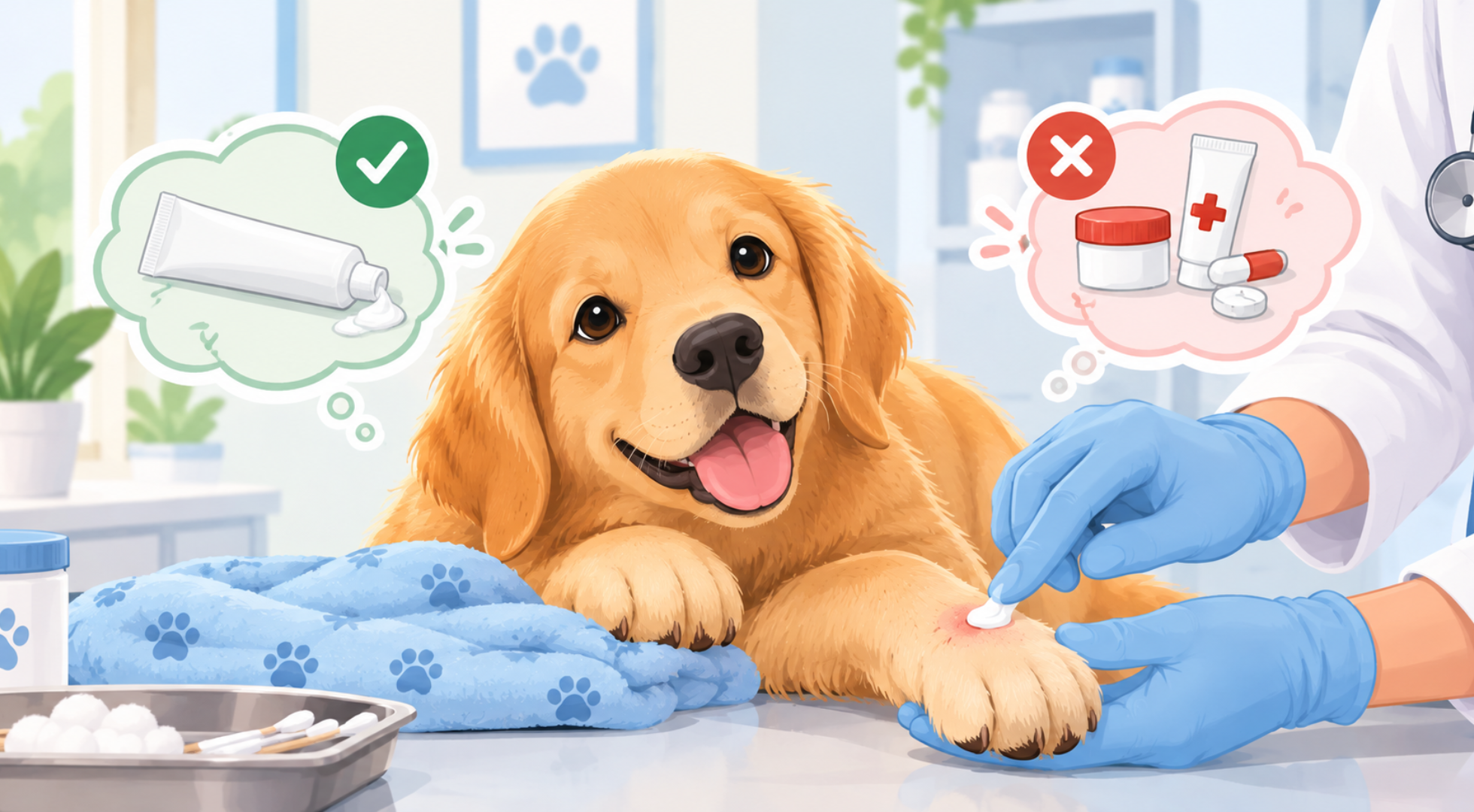
- Apply a very thin layer of what your veterinarian suggested, with a cotton swab or a gloved finger.
- Prevent licking. Licking removes the ointment and introduces germs. Use a cone (Elizabethan collar) or a recovery suit.
- Observe. Inspect the wound at least twice a day, and contact your veterinarian if there is any problem.
Use a minimal amount of ointment, and avoid heavy applications.
Preventing Your Dog From Licking
Even a little bit of ointment may cause digestive upset, and licking can irritate the wound site.
- A cone or an Elizabethan collar is the most dependable solution.
- Some parts of the body may be covered using a soft recovery suit or a T-shirt.
- Distract the dog with walks, a chew toy, or a treat puzzle after applying ointment.
- Keep an eye on the dog while the ointment takes effect.
In case your dog ingests any ointment in large amounts, you should immediately contact your vet or an animal poison center.
Skin Problems That Aren’t Simple Infections
Not all red, irritated bumps require antibiotics.
- “Hot spots” or acute moist dermatitis begin because of an allergy, parasite, or irritation and can spread rapidly. The veterinarian may clip the affected area, treat it, and prescribe treatment.
- Ear infections may be bacterial, yeast, or a combination of both and should be examined by your veterinarian and given appropriate ear drops.
- Eye infections should be seen by the veterinarian, and certain eye ointments can be dangerous when there is damage to the cornea.
- Urinary tract infections must be diagnosed by your veterinarian and will likely be treated with oral medications.
- Chronic skin conditions suggest allergic reactions or hormonal problems.
If you do not find out what caused the infection, it is likely to return.
Oral Antibiotics
Other infections require antibiotics by mouth or injection. Prescription only drugs, they must be taken as directed.
- Take the entire dose unless otherwise advised by your vet.
- Never share or repeat antibiotics.
- Do not use human antibiotics unless prescribed by your veterinarian.
- Be aware of any potential side effects, including nausea, diarrhea, lack of appetite, itching, or hives.
Improper use of antibiotics can cause antibiotic resistance.
Side Effects to Watch For
Stop using a topical product and call your vet if you see:
- Increased redness, swelling, or itching at the site
- Hives or a rash
- Vomiting or diarrhea after your dog licks the area
- Swelling of the face or trouble breathing (an emergency)
Building a Dog First Aid Kit
A basic kit can help you handle small problems and get to the vet safely:
- Sterile saline and gauze pads
- Self-adhesive bandage wrap
- Clean towels
- Blunt-tipped scissors and tweezers
- Disposable gloves
- A cone or recovery suit
- A digital thermometer and water-based lubricant
- Your vet’s phone number and an emergency clinic’s number
- Any products your vet has specifically recommended
Ask your veterinarian what to include for your dog’s size, age, and health.
Pet Health and Your ESA
Should your dog be a registered emotional support animal, then the well-being of your furry friend becomes relevant for you both. An animal that does not feel well cannot offer the same soothing company, so regular vet visits become a must. Additionally, having updated vaccines and records may come in handy in case the landlord requests them as part of the accommodation process.
For those who want to find out more information on emotional support animals’ documentation, HealifyNow’s ESA letter page may prove helpful. It is important to understand that the letter is only needed to back up a housing application request and has no bearing whatsoever on the dog’s healthcare.
Tips for Safe Wound Care
- When in doubt, contact your veterinarian before administering any treatment.
- Do not diagnose skin, ear, eye, and urinary issues by yourself.
- Cleaning is essential. Usually, most injuries require cleaning rather than applying any creams.
- Do not exceed the minimum dosage required.
- Stop the dog from licking the area.
- Monitor the wound for changes.
- Do not use old or human medications.
- Keep track of all symptoms, treatments, and veterinary appointments.
- Try to remain calm because dogs can sense when we’re stressed out.
Final Thoughts
There is not one best antibiotic cream for dogs. Simple and superficial cuts can heal on their own after thorough cleaning, while your vet might approve of a small amount of topical ointment. Yet, there are a number of conditions that resemble infections and require a vet’s assessment and treatment, such as those affecting the ears, eyes, urination, and recurrent skin conditions. Steroids, zinc oxide, essential oils, leftover medications, preventing licking, and a prompt phone call to your vet will help your pet feel much better.
Want to learn more about caring for your ESA and protecting your housing rights? Visit HealifyNow to explore your options.
Frequently Asked Questions (FAQs)
1. Can I use human antibiotic ointment on my dog?
Sometimes a vet will okay a thin layer on a small, shallow scrape, but ask first. Avoid steroid or pain-relief formulas, and block licking. Deep or dirty wounds need a veterinarian.
2. What’s the best antibiotic cream for dogs?
There’s no single best one. The right product depends on the problem and your dog, and many require a veterinary diagnosis or prescription. Ask your vet what suits your dog’s situation.
3. Is triple antibiotic ointment safe for dogs?
It’s sometimes used on minor scrapes, but neomycin can cause allergic reactions in some dogs, and it isn’t made for pets. Check with your veterinarian before using it.
4. Can I use antibiotic cream for my dog’s ear or eye infection?
Not at all. Ear and eye infections require a visit to the veterinarian and treatments meant for that area specifically. Using skin creams will not work well and could actually cause further damage if applied in the eyes.
5. What if my dog licks the antibiotic cream?
It might just cause stomach irritation if your dog does a little bit of licking; however, if your dog ingests a lot, you should contact your veterinarian or the pet poison hotline. Make sure to use a cone or pet recovery suit so this doesn’t happen.
6. When should I take my dog to the vet for a wound?
Go promptly for deep wounds, bites, punctures, heavy bleeding, swelling, pus, a bad smell, fever, lethargy, or a wound that isn’t improving after a day or two.