

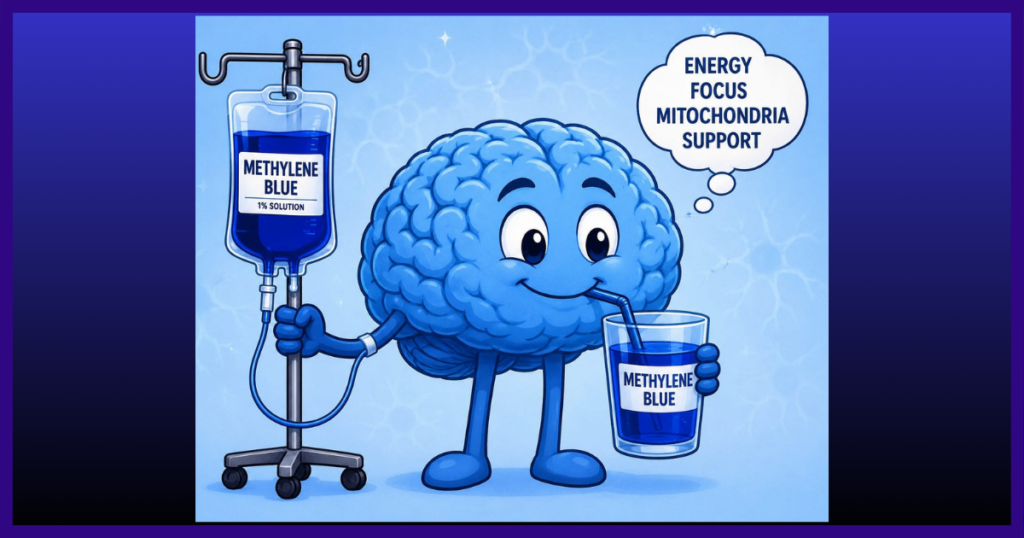
The phrase “methylene blue mitochondria” captures the scientific idea driving most of the compound’s biohacking popularity: its unique ability to interact with the mitochondrial electron transport chain. Here’s what’s genuinely known, what’s still speculative, and why the distinction matters.
What Mitochondria Do
Mitochondria are often called the “powerhouses of the cell” because they generate ATP (adenosine triphosphate), the molecule cells use for energy, through a process called oxidative phosphorylation. This process relies on the electron transport chain (ETC), a series of protein complexes that pass electrons along, ultimately producing ATP.
How Methylene Blue Interacts With Mitochondria
Methylene blue’s key property is its redox activity — its ability to cycle between oxidized and reduced states. In laboratory research, this has been shown to let methylene blue act as an alternative electron carrier, effectively creating a “bypass” route for electrons within the mitochondrial ETC under certain conditions, particularly when parts of the normal chain (like Complex I) are impaired or dysfunctional.
This is the basis for research interest in conditions involving:
- Mitochondrial dysfunction models in cell and animal studies
- Oxidative stress reduction in laboratory settings
- Neuroprotection research, particularly around conditions with mitochondrial involvement
What the Research Actually Shows
It’s important to separate mechanism from proven outcome:
- Cell and animal studies have shown methylene blue can improve certain markers of mitochondrial function and reduce oxidative damage under specific experimental conditions.
- Human clinical evidence for meaningful, day-to-day energy or cognitive benefits from low-dose methylene blue supplementation remains limited, with most human studies being small, short in duration, or focused on specific patient populations (such as tau-related cognitive research) rather than healthy adults seeking general energy benefits.
- Dose-dependence is unusual and important: research suggests low concentrations may support mitochondrial function in certain lab models, while higher concentrations can have different or even opposing effects (including generating oxidative stress rather than reducing it). This dose-response complexity is one reason “more is better” thinking doesn’t apply and why casual self-dosing is discouraged.
Why This Excites Researchers — and Why Caution Is Warranted
The mitochondrial mechanism is genuinely interesting to cell biologists and neuroscientists, which is part of why methylene blue continues to be studied in the context of neurodegenerative disease, aging biology, and metabolic research.
But genuine scientific interest in a mechanism is not the same as a proven, safe, and effective supplement for the general public. Popular science coverage and supplement marketing often compress this nuance, presenting preliminary lab findings as if they were established human benefits.
Practical Considerations
If you’re interested in mitochondrial health generally, keep in mind:
- Mitochondrial function is influenced by many factors, including diet, exercise, sleep, and specific medical conditions — not just any single compound
- Methylene blue’s interaction risks (especially with antidepressants) apply regardless of the reason for use
- Talk to a physician about your specific health goals rather than assuming a lab-based mechanism will translate directly into a personal benefit
Bottom Line
The methylene blue–mitochondria connection is one of the more scientifically grounded reasons the compound draws attention in longevity and biohacking circles. But grounded doesn’t mean settled — human evidence for meaningful mitochondrial benefits from supplement-style use remains preliminary, and the same serious interaction risks apply as with any other use case.
Frequently Asked Questions
Does methylene blue increase ATP production in humans?
Some animal and cell studies suggest support for mitochondrial function, but robust human data confirming increased ATP production from supplement-level doses is limited.
Is methylene blue considered a mitochondrial “booster” supplement?
It’s marketed that way by some sellers, but this isn’t an FDA-recognized or clinically established category or claim.
What other approaches support mitochondrial health with stronger evidence?
Regular exercise, adequate sleep, and a nutrient-dense diet have some of the strongest evidence for supporting mitochondrial function; discuss supplement options like CoQ10 with a healthcare provider.
Why does dose matter so much with methylene blue and mitochondria?
Research suggests low and high concentrations can have different, sometimes opposite, effects on oxidative stress and mitochondrial function, making self-dosing especially unpredictable.
Is mitochondrial research on methylene blue new?
No, interest in its redox and electron transport properties dates back decades, though renewed attention has grown alongside broader interest in longevity science.
Authoritative Sources
- National Institute on Aging (National Institutes of Health): https://www.nia.nih.gov
- National Center for Biotechnology Information (PubMed): https://pubmed.ncbi.nlm.nih.gov
- National Institute of General Medical Sciences: https://www.nigms.nih.gov