

HealifyNow provides some of the services discussed in this article. Our content is written to inform, and clinical decisions are always made by a licensed clinician.
Your results come in, and there is a highlighted test on the report – TSH: high. It could have been part of your annual physical exam, or perhaps your doctor wanted it done since you have been feeling tired, getting cold all the time, or putting on weight without a cause.
This will help you understand high thyroid-stimulating hormone, its causes, the symptoms that it brings about, and the steps that follow.
What Is Thyroid-Stimulating Hormone (TSH)?
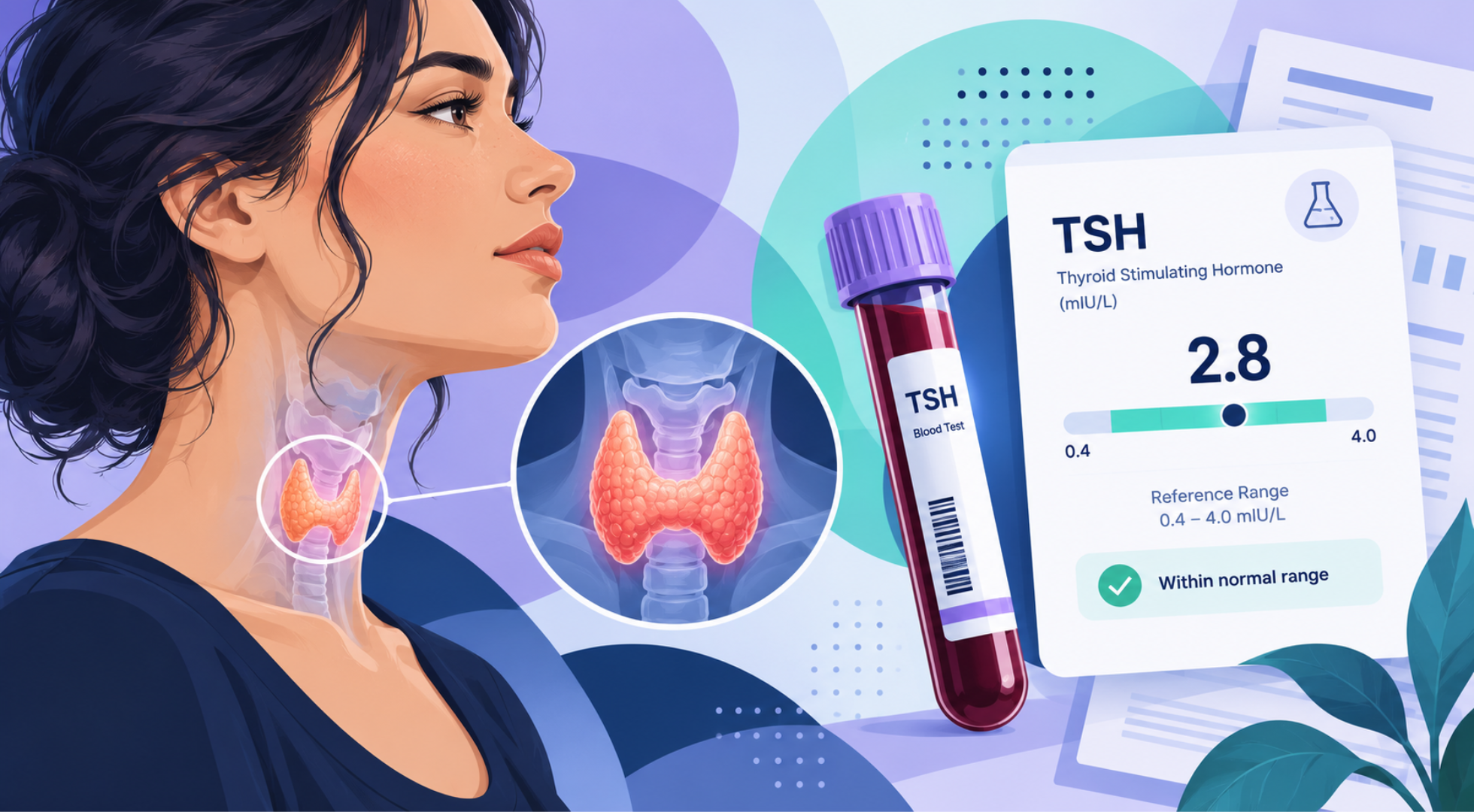
TSH is a hormone produced by the pituitary gland located in the bottom of your brain. The function of this hormone is to regulate the amount of hormones to be made by your thyroid gland located in your neck. The hormones are T4 and T3 (thyroxine and triiodothyronine), respectively, and regulate the metabolism, heartbeat, body temperature, energy, and digestion processes in your body.
In other words, imagine that it works like this:
- When your body lacks thyroid hormones, your pituitary increases the TSH level to work harder on its production.
- If there are excessive hormones, then the pituitary decreases its TSH level.
That’s why elevated levels of TSH mean that your thyroid gland lacks hormones; this condition is called hypothyroidism.
What Is a Normal TSH Level?
There are slight variations from lab to lab in reference ranges, but one range used is:
- Approximately 0.4 to 4.0 mIU/L (sometimes 4.5 or 5.0 as the upper range)
The controversy continues over the optimal cutoff value. While some believe the upper cutoff should be as low as 2.5 mIU/L, this would result in four times more individuals being classified as subclinical hypothyroid, potentially leading to overtreatment. Age also plays a role. A national study revealed that the 97.5th percentile of TSH levels was 3.56 mIU/L in individuals between 20 and 29 years old, while it was 7.49 mIU/L in people aged 80 and older.
What Counts as High TSH?
Doctors usually group high TSH into two categories, depending on your free T4 level:
| Category | TSH | Free T4 | What It Means |
|---|---|---|---|
| Subclinical Hypothyroidism | Mildly high (often 4.5–10 mIU/L) | Normal | Early or mild thyroid underactivity |
| Overt Hypothyroidism | High (often above 10 mIU/L) | Low | Clear thyroid underactivity |
Subclinical hypothyroidism is defined by an elevated TSH together with a normal free thyroxine (T4) level. It’s common, and about 70% of people with subclinical hypothyroidism have no symptoms.
Symptoms of High TSH and Hypothyroidism
When thyroid hormone runs low, your body slows down. Common symptoms include:
- Fatigue and low energy
- Feeling cold more often than others
- Weight gain or difficulty losing weight
- Constipation
- Dry skin and brittle nails
- Hair thinning or hair loss
- Muscle aches or weakness
- Puffy face
- Slow heart rate
- Heavy or irregular periods
- Low mood, depression, or brain fog
- A hoarse voice or an enlarged thyroid (goiter)
The symptoms gradually manifest themselves and can easily be confused for other disorders such as perimenopause, depression, anemia, and sleep problems. This is the reason why only a blood test, and not the symptoms, can help one identify this problem.
Weight issues: In cases of hypothyroidism, there might be some weight gain, maybe a few pounds. The reasons for this include fluid retention and a low metabolism rate.
What Causes High TSH?
1. Hashimoto’s Thyroiditis (the Most Common Cause in the U.S.)
This disease occurs due to the gradual destruction of the thyroid by the body’s immune system. It affects mostly women and is hereditary. Diagnosis is done via a blood test to check for the presence of thyroid peroxidase antibodies (TPO antibodies).
2. Iodine Imbalance
Iodine deficiency is one of the major causes of this disease globally, although excess iodine (supplements, seaweed, or iodinated contrast dye) may interfere with the functioning of the thyroid gland.
3. Thyroid Surgery or Radioactive Iodine Treatment
The absence or partial removal of the thyroid gland through surgery, or the treatment of hyperthyroidism with radioactive iodine, may lead to low thyroid hormone production.
4. Medications
Several medications increase TSH levels, such as lithium, amiodarone, some cancer immunotherapies, and anti-seizure drugs.
5. Postpartum or Other Thyroid Inflammation
Thyroiditis after pregnancy or a viral illness can cause temporary swings.
6. Recovery From Illness
TSH can rise temporarily while you recover from a serious illness, which is why doctors often repeat the test before diagnosing.
7. Pituitary Problems (Rare)
A pituitary tumor that makes too much TSH is rare, but it causes a very different pattern: high TSH with high T4.
8. Pregnancy
Pregnancy changes thyroid needs, and TSH targets are different. Untreated thyroid problems during pregnancy can affect both mother and baby, so pregnant women with high TSH should be evaluated promptly.
9. Lab Interference
Biotin-containing supplements (used for hair, skin, and nail care) can affect thyroid function tests and give erroneous results. Check with your physician if you should stop using biotin before tests.
Why You Shouldn’t Panic About One High Result
One-time increased level of TSH cannot be taken as a diagnosis. There are many factors that influence TSH levels, including time of day, infections, stress, sleep, and even some supplements. Subclinical hypothyroidism can disappear or develop further, so the usual way is to conduct repeated tests after 6 to 12 weeks, including free T4 and thyroids antibodies.
How Is High TSH Diagnosed?
A thorough evaluation usually includes:
- TSH (repeated to confirm)
- Free T4, and sometimes free T3
- TPO antibodies to look for autoimmune thyroid disease
- A symptom and medication review
- A neck exam, and sometimes a thyroid ultrasound
This is where getting complete lab work really pays off. At HealifyNow, you can order a full lab panel or biomarker testing online (from $199), get drawn at a location near you, and have a licensed clinician review and explain your results. No insurance is needed, and pricing is published.
How Is High TSH Treated?
Management will depend on your TSH level, free T4, your symptoms, and your general health status.
Overactive hypothyroidism usually requires levothyroxine hormone therapy. Most patients experience relief within weeks, with adjustments made according to further blood test results.
However, subclinical hypothyroidism is more difficult to deal with. One can say that the most appropriate way is to make treatment decisions according to the following criteria:
- TSH is above about 10 mIU/L
- TPO antibodies are positive
- You’re pregnant or trying to conceive
- You have significant symptoms, heart disease, or high cholesterol
For milder elevations, many clinicians simply recheck labs every 6 to 12 months.
Never start thyroid medication without a diagnosis. Taking thyroid hormone when you don’t need it can cause heart rhythm problems and bone loss, and it is not a safe weight-loss shortcut.
Helpful Lifestyle Habits With High TSH
Lifestyle modifications can complement treatment but never replace it:
- Have a healthy diet with appropriate amounts (not too much) of iodine, selenium, and protein
- Avoid high doses of supplements such as kelp or iodine without your doctor’s recommendation
- Do exercises and weight lifting for muscle and metabolism preservation
- Pay attention to sleep and stress management
- If prescribed, take levothyroxine consistently on an empty stomach, and keep it away from calcium, iron, and some other supplements for four hours
High TSH, Hormones, and Women’s Health
A thyroid condition is much more common among women and can manifest in symptoms that are also associated with perimenopause and menopause: fatigue, weight fluctuations, mood swings, thinning hair, and menstrual cycle changes. It can be tempting to assume hormonal imbalances are the cause and overlook thyroid disorders, or vice versa.
When experiencing such symptoms at a midlife age, it is better to check both. HealifyNow offers lab-guided care for perimenopause, HRT for women, and PCOS, and the practitioners can evaluate your thyroid and all hormonal lab tests simultaneously.
High TSH and Weight Loss
When having trouble losing weight and having high levels of TSH, it makes sense to take care of your thyroid condition first. An untreated hypothyroidism can make losing weight difficult and may influence your response to weight loss programs. Before engaging in any kind of plan, it makes sense to run some baseline labs.
When to See a Clinician Promptly
Seek care if you have:
- A TSH well above range, especially above 10 mIU/L
- Symptoms such as persistent fatigue, cold intolerance, constipation, or hair loss
- A visible neck swelling or trouble swallowing
- A family history of thyroid disease
- Pregnancy or plans to become pregnant
Get urgent care for extreme drowsiness or confusion, a very slow heart rate, a very low body temperature, or severe swelling, which can signal a rare but serious complication of severe hypothyroidism.
Get Your Results Explained
But while a flagged lab does not necessarily indicate the need for medication, it surely indicates that further investigation into the matter is in order. HealifyNow offers consultations with licensed U.S. clinicians via video call or over the phone, and the first visit is free and without requiring any payment method from you. A clinician can analyze your labs, recommend additional tests, and collaborate with your primary care physician or endocrinologist if necessary.
Book a free consultation with HealifyNow to talk through your results.
The Bottom Line
What high thyroid-stimulating hormone levels signify? Almost always, high TSH levels signal an inability of your thyroid gland to produce sufficient hormone, thus stimulating your pituitary gland to work harder. MILDLY high TSH with normal free T4 (subclinical hypothyroidism) happens all the time and does not necessarily require any treatment. High TSH with low free T4 (overt hypothyroidism) normally does.
Never trust a single test result. Repeat your labs, do free T4 and antibody testing, check your medications, and consult a clinician.
Frequently Asked Questions (FAQs)
1. What is considered a high TSH level?
Most labs flag a TSH above roughly 4.0 to 4.5 mIU/L as high, though ranges vary. A mild elevation with normal free T4 is subclinical hypothyroidism, while a level above about 10 mIU/L usually calls for treatment.
2. Can high TSH go back to normal on its own?
Sometimes. TSH can rise temporarily from illness, medications, or recovery after thyroid inflammation. That’s why clinicians usually repeat the test in 6 to 12 weeks before diagnosing.
3. Does high TSH cause weight gain?
It can cause modest weight gain from a slower metabolism and fluid retention, often just a few pounds. Large weight gain usually has other contributors, so a full evaluation is worthwhile.
4. Do I need medication if my TSH is slightly high?
Not necessarily. In case of a slight elevation without any symptoms and with normal free T4 levels, a lot of clinicians go for lab monitoring. Treatment may be considered if the TSH level exceeds 10 mIU/L, antibodies are positive, or you are pregnant.
5. Can biotin or other supplements affect TSH results?
Yes. Taking high doses of biotin which is usually used in hair and nails care is known to produce wrong results on some thyroid tests. It is recommended to check with your healthcare provider regarding this issue before taking the test.
6. Can I get thyroid-related lab tests online?
Yes. HealifyNow provides online laboratory testing with test result evaluation performed by licensed U.S. physicians. Your first consultation is free.