Understanding the full picture before your first appointment can save you time, frustration, and money. So let’s walk through it clearly and practically.
Table OF Content
- 1 What Is Mounjaro, and How Does It Work?
- 2 Who Qualifies for Mounjaro in Phoenix?
- 3 How to Get a Mounjaro Prescription in Phoenix, AZ
- 4 In-Person Clinics vs. Telehealth in Phoenix
- 5 Mounjaro Cost in Phoenix: What to Expect
- 6 Navigating Insurance Coverage in Arizona
- 7 Side Effects and What to Watch For
- 8 Pairing Mounjaro with Lifestyle Changes in the Phoenix Climate
- 9 Frequently Asked Questions
- 9.1 Can I get Mounjaro in Phoenix without a diabetes diagnosis?
- 9.2 How long does it take to see results with Mounjaro?
- 9.3 Is Mounjaro available via telehealth in Phoenix?
- 9.4 What is the difference between Mounjaro and Zepbound?
- 9.5 Is compounded tirzepatide still available in Phoenix?
- 9.6 Does Arizona Medicaid cover Mounjaro?
- 10 Conclusion
What Is Mounjaro, and How Does It Work?
Mounjaro is the brand name for tirzepatide, a weekly injectable medication manufactured by Eli Lilly. It was originally approved by the U.S. Food and Drug Administration (FDA) in May 2022 to treat type 2 diabetes in adults. Since then, it has gained significant attention for its impressive weight loss results, which have led many physicians to prescribe it off-label for patients who are overweight or obese but do not have diabetes.
What sets Mounjaro apart from older GLP-1 medications like semaglutide is its dual-action mechanism. It activates both the GLP-1 (glucagon-like peptide-1) and GIP (glucose-dependent insulinotropic polypeptide) receptors simultaneously. Most competing medications only target one of these pathways. By working on both, tirzepatide is able to slow how quickly food leaves the stomach, reduce appetite more effectively, and help regulate blood sugar from multiple angles at once.
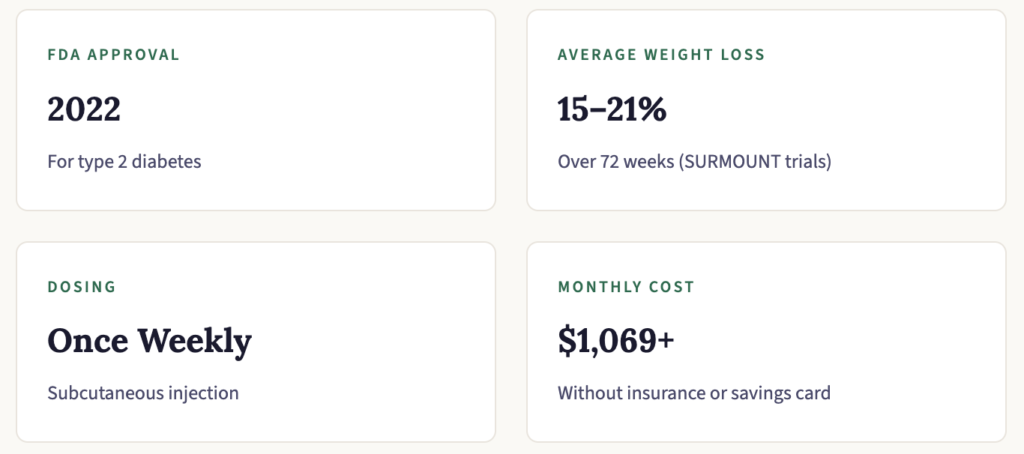
Clinical trials have shown that patients taking tirzepatide at the highest approved dose lost an average of around 20.9% of their body weight over 72 weeks, compared to just 3.1% in the placebo group. Those are meaningful, life-changing numbers for people who have struggled to lose weight through diet and exercise alone.
Who Qualifies for Mounjaro in Phoenix?
Not everyone is automatically eligible for a Mounjaro prescription. Providers in Phoenix — whether in-person or via telehealth — will assess your eligibility based on a combination of your health history, current diagnoses, and body metrics.
Generally speaking, you may qualify if you meet one of the following criteria:
- You have been diagnosed with type 2 diabetes and need better blood sugar management
- Your BMI is 30 or higher, which falls in the obese category
- Your BMI is between 27 and 29.9 and you have at least one weight-related health condition, such as high blood pressure, elevated cholesterol, or pre-diabetes
Before prescribing, your provider will also review your full medication list, personal and family medical history, kidney and liver function, and whether you have any history of pancreatitis or thyroid conditions. People with a personal or family history of medullary thyroid carcinoma should avoid Mounjaro altogether, as the FDA has noted a potential risk in this group based on animal studies.
Important note: Mounjaro is currently FDA-approved only for type 2 diabetes. When prescribed for weight loss, it is considered “off-label.” This distinction matters significantly when it comes to insurance coverage, which we will explain in detail below.
How to Get a Mounjaro Prescription in Phoenix, AZ
There are two main paths to getting a Mounjaro prescription in the Phoenix area: visiting a local clinic in person or completing your consultation through a telehealth provider. Both options are widely available in the Valley, and the process for each is fairly similar.
-
Schedule a consultation. Book an appointment with a licensed physician, nurse practitioner, or weight loss specialist either locally or through a telehealth platform. Many Phoenix-area clinics offer free initial consultations specifically for GLP-1 medications like Mounjaro.
-
Complete a full medical evaluation. Your provider will assess your BMI, current diagnoses, medications, and overall health. They may request baseline labs, including blood sugar levels, A1C, kidney function, and cholesterol, before prescribing.
-
Discuss your treatment plan. If you qualify, your provider will recommend a starting dose — usually 2.5 mg per week — and walk you through how to self-administer the subcutaneous injection in your abdomen, thigh, or upper arm.
-
Receive your prescription. The prescription is sent to a pharmacy. Depending on your clinic or telehealth provider, medication may be sent directly to your home or picked up at a local pharmacy in Phoenix.
-
Begin regular follow-ups. Your provider will schedule check-ins to monitor your progress, adjust your dose every four weeks if needed, and manage any side effects that come up.
The maximum approved dose is 15 mg per week, though many patients see meaningful results at lower doses and never need to go higher. Dose increases are gradual and done based on how well your body tolerates the medication, not on an arbitrary schedule.
In-Person Clinics vs. Telehealth in Phoenix
Both options have real advantages depending on your lifestyle. Phoenix has a well-developed network of weight loss clinics and medspas that have added GLP-1 programs to their offerings. In-person care gives you hands-on guidance with your first injection, access to routine labs on-site, and a consistent relationship with a local care team.
Telehealth, on the other hand, is especially convenient if you work long hours, live in the outer suburbs like Chandler, Gilbert, or Glendale, or prefer not to take time off for appointments. Licensed providers complete everything online — you answer health questions, submit your health history, and get your prescription reviewed and sent electronically. Medication can often arrive at your door within a few days.
Whichever path you choose, make sure the provider is licensed in Arizona and has documented experience prescribing GLP-1 medications. Resources like HealifyNow.com can help you find and compare qualified providers in your area, making the search a lot less overwhelming.
Mounjaro Cost in Phoenix: What to Expect
Cost is often the first real barrier people face. The manufacturer list price for Mounjaro is approximately $1,069 to $1,080 per month for a 28-day supply of four weekly injection pens, regardless of the dose strength you are prescribed. That number sounds significant, but it is rarely what patients end up paying.
Here is a practical breakdown of what different payment situations look like:
With commercial insurance (diabetes diagnosis): If you have type 2 diabetes and your plan covers Mounjaro, you may qualify for the Eli Lilly Mounjaro Savings Card, which can reduce your cost to as little as $25 per month for eligible commercial insurance holders. Coverage is far more consistent when the prescription is tied to a diabetes diagnosis rather than weight loss alone.
With commercial insurance (weight loss only): Coverage is much less predictable. Most plans categorize Mounjaro as a diabetes drug and may deny coverage for off-label weight loss use. In these cases, your insurer might redirect you to Zepbound — the same active ingredient, tirzepatide, but FDA-approved specifically for chronic weight management — which may have better coverage for obesity treatment under some employer plans.
Without insurance (self-pay): At full retail price, Mounjaro costs between $1,000 and $1,200 per month, which adds up to more than $12,000 per year. This is a significant expense, and it makes exploring all savings options extremely worthwhile before filling your first prescription.
One important 2026 update: Compounded tirzepatide, which was previously available at $299 to $499 per month through certain compounding pharmacies, is no longer legally permitted. The FDA removed tirzepatide from its drug shortage list earlier in 2026, which eliminated the legal basis for pharmacy compounding of this ingredient. Any provider still advertising compounded tirzepatide is operating outside current FDA guidelines.
Insurance coverage for Mounjaro in Arizona follows national trends and is closely tied to your diagnosis. Major commercial insurers — including Blue Cross Blue Shield, UnitedHealthcare, Aetna, and Cigna — typically include Mounjaro on their formularies for type 2 diabetes treatment. However, coverage for weight loss without a diabetes diagnosis remains inconsistent and is often denied outright.
Most plans that do cover Mounjaro require prior authorization. This means your doctor must submit documentation showing medical necessity before the insurer agrees to pay. Commonly required documents include your BMI measurement, current diagnoses, a record of other treatments you have already tried, and in some cases, recent lab results.
Medicare coverage remains limited as of 2026. Mounjaro may be covered under Medicare Part D when prescribed specifically for type 2 diabetes. Coverage for weight management alone is still uncommon under Medicare, though there has been ongoing legislative discussion around expanding access to GLP-1 medications for seniors. Under the 2026 Medicare Part D rules, out-of-pocket costs for covered medications are capped at $2,100 per year, which offers some protection for those who do qualify.
If your claim is denied, do not stop there. A well-documented appeal submitted through your provider can sometimes reverse the decision. It is also worth asking your provider about Zepbound as an alternative, since its FDA approval specifically for obesity treatment may open different coverage pathways within your plan.
Side Effects and What to Watch For
Mounjaro is generally well-tolerated, but like any medication, it comes with potential side effects that you should understand going in. The most common are gastrointestinal in nature: nausea, diarrhea, constipation, vomiting, and reduced appetite. These tend to be most noticeable when you first start the medication or increase your dose, and they usually improve as your body adjusts over the following weeks.
Less common but more serious risks include pancreatitis, gallbladder issues, and kidney problems related to dehydration, which can become a concern in a hot climate like Phoenix where dehydration is already a risk. The FDA has also flagged a potential association with thyroid tumors based on animal studies, which is why people with a personal or family history of medullary thyroid carcinoma should not use this medication.
The best way to manage side effects is to stay in close contact with your provider, especially in the first few months. Most clinics that prescribe Mounjaro offer regular check-ins specifically for this reason.
Pairing Mounjaro with Lifestyle Changes in the Phoenix Climate
Medication alone rarely delivers the best possible results. Clinical outcomes consistently show that tirzepatide works significantly better when paired with dietary changes and regular physical activity. Phoenix’s climate does add a layer of planning, particularly during the summer months when outdoor exercise before 7 or 8 in the morning is often the only comfortable option.
Your provider will likely recommend a diet built around lean proteins, high-fiber vegetables, whole grains in measured portions, and healthy fats. Staying well-hydrated is especially critical in the desert heat, both for general health and to reduce the risk of the gastrointestinal side effects associated with Mounjaro. Resistance training alongside cardio is recommended to help preserve muscle mass, which can sometimes be lost alongside fat during significant weight loss.
Many Phoenix-area weight loss clinics incorporate nutritional coaching and behavioral support directly into their Mounjaro programs. If yours does not, asking for a referral to a registered dietitian can make a meaningful difference in your long-term results.
Frequently Asked Questions
Can I get Mounjaro in Phoenix without a diabetes diagnosis?
Yes, many providers in Phoenix will prescribe Mounjaro off-label for weight loss if you have a BMI of 30 or higher, or a BMI of 27 or higher with a weight-related health condition. The prescription is legal and common, but it means your insurance coverage will be much harder to secure compared to patients with a confirmed type 2 diabetes diagnosis. In these cases, your provider may suggest Zepbound instead, since it is specifically FDA-approved for weight management.
How long does it take to see results with Mounjaro?
Most patients begin noticing a reduction in appetite within the first one to two weeks. Visible weight loss typically becomes apparent by the end of the first month. Significant results — those that reflect a major change in body weight — usually take anywhere from six to eighteen months, depending on your starting weight, dose, and how closely you follow dietary and exercise recommendations alongside the medication.
Is Mounjaro available via telehealth in Phoenix?
Yes. Several telehealth platforms are licensed to prescribe Mounjaro in Arizona, and the entire process — from consultation to prescription — can be completed online. Some services deliver the medication directly to your door within days. This is a particularly popular option for residents in the Phoenix suburbs who prefer not to travel to a clinic for every appointment.
What is the difference between Mounjaro and Zepbound?
Both Mounjaro and Zepbound contain the same active ingredient: tirzepatide. The difference is in their FDA-approved use. Mounjaro is approved for type 2 diabetes, while Zepbound was approved in late 2023 specifically for chronic weight management in adults with obesity or overweight with at least one related health condition. This distinction matters significantly when dealing with insurance, since many plans are more willing to cover Zepbound for weight loss purposes than Mounjaro used off-label.
Is compounded tirzepatide still available in Phoenix?
No. As of early 2026, the FDA removed tirzepatide from its drug shortage list, which means compounding pharmacies are no longer legally permitted to produce compounded versions of the medication. If you see any provider or pharmacy in Phoenix still advertising compounded tirzepatide, that is a red flag and you should look for care elsewhere. Your options for tirzepatide are now limited to brand-name Mounjaro or Zepbound through licensed pharmacies.
Does Arizona Medicaid cover Mounjaro?
Coverage under Arizona Medicaid (AHCCCS) for Mounjaro is limited and primarily focused on patients with type 2 diabetes. Coverage for weight management alone is uncommon under most Medicaid plans, and prior authorization is typically required even when diabetes is the documented indication. It is best to contact AHCCCS or your managed care plan directly to confirm your specific formulary status before assuming coverage.
Conclusion
Getting Mounjaro in Phoenix is a straightforward process once you understand the steps. Start by finding a qualified provider — whether that is a local clinic in the Valley or a licensed telehealth service — and go into your consultation prepared with your health history and a clear sense of your goals. Understand the insurance landscape ahead of time, explore savings programs through the manufacturer, and make sure your treatment plan includes lifestyle support alongside the medication. For most people who qualify, Mounjaro represents a meaningful opportunity to make real, lasting progress on their health — and Phoenix has the providers and resources to help you do it right.