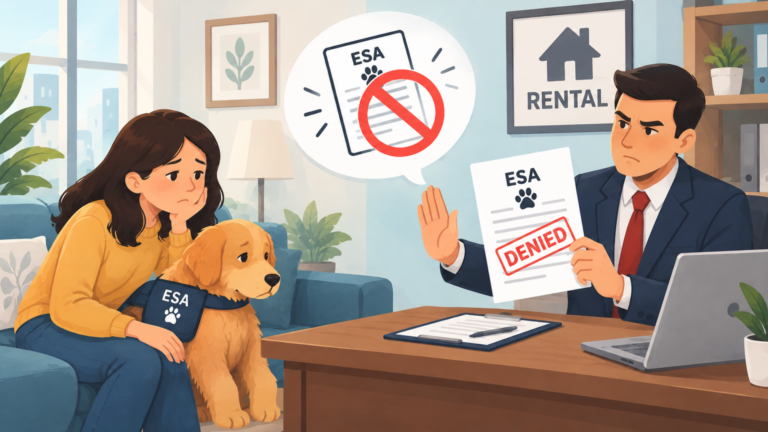

You’ve found your perfect rental home, but the next thing you receive from the landlord is a link: “Please create your profile at PetScreening.” If you want to move in with your emotional support animal, this can create many doubts for you. Do you need to go through PetScreening to get your ESA letter? Is this a mandatory process? Is it paid?
This guide will answer the question “Is PetScreening mandatory to obtain an ESA letter?” This article provides information about PetScreening, its connection with your documentation, what landlords can ask and cannot ask, and how to get a proper letter from a licensed professional.
Is PetScreening Required to Get an ESA Letter?
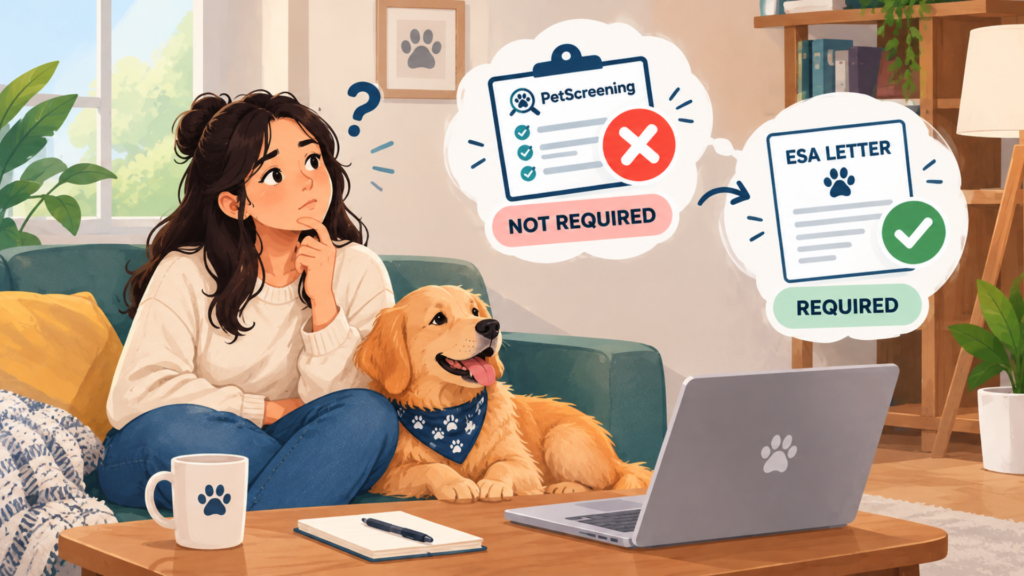
No. PetScreening is not involved in the process of obtaining an ESA letter. An ESA letter is issued by a licensed mental health professional (LMHP) following the assessment. PetScreening has nothing to do with qualification for an ESA letter, nor is it a licensing authority, registry, or any government agency.
What PetScreening is involved with is the submission of an ESA letter once it has been issued. Some property owners use PetScreening for processing and storing the information about pets and assistance animals. So if your landlord is one of them, then he/she can ask you to send your ESA documentation to their portal.
Summarizing:
- Obtaining an ESA letter: through a licensed professional. No PetScreening involved.
- Submission of the letter to the landlord: some landlords may ask you to use their preferred portal, which can be PetScreening.
What Is PetScreening?
PetScreening is an external screening service utilized by property managers for managing pet and animal accommodation requests. Individuals have to submit a profile on the PetScreening website along with information on the animal, and the website aids in facilitating the screening process by the property management. In the case of ESAs, there could be a verification procedure as well.
It is an independent platform used by landlords and not part of any legal ESA procedure.
What Is an ESA Letter?
An ESA letter is a document written by a licensed mental health professional. It confirms that you have a mental or emotional health condition and that your animal provides therapeutic support that helps with your symptoms.
A valid letter typically includes:
- The professional’s name, license type, license number, and state of licensure
- The date the letter was issued
- A statement that you have a condition that may benefit from an emotional support animal
- Details of the animal covered
- The professional’s signature and contact information
The letter does not have to reveal your specific diagnosis to your landlord.
Can a Landlord Require You to Use PetScreening?
That is where things get complicated. Per the federal Fair Housing Act (FHA), your landlord needs to be able to accommodate an assistance animal when needed. He/she may request proof of your disability and ask for proper documentation if your need for an assistance animal is not obvious. Many landlords utilize PetScreening for this very purpose.
There are certain limitations worth considering:
- Your rights under the Fair Housing Act will not change based on the platform you choose to submit your documentation on. Using PetScreening does not give or take away any of your rights under the FHA.
- The landlord cannot generally request your medical diagnosis or records.
- The landlord cannot charge a pet deposit or pet rent for a properly registered ESA.
- Fees are often a gray area. The official federal housing advice states that housing providers generally should not impose fees on assistance animals. While some of the platforms might charge you a fee for creating and verifying your profile, the appropriateness of such actions depends on the way this payment structure is set up.
- You can usually ask about alternatives. If you’re uncomfortable with the platform, you can ask whether the landlord will accept your letter directly.
Because practices and policies change, check the current terms with your property manager and the platform itself.
PetScreening vs. an ESA Letter: What’s the Difference?
| Category | ESA Letter | PetScreening |
|---|---|---|
| What it is | Documentation from a licensed professional | A landlord-side screening platform |
| Who issues or runs it | Licensed mental health professional | Third-party company |
| Needed to qualify for an ESA? | Yes, for housing protection | No |
| Legally required for ESAs? | Documentation may be requested when need isn’t obvious | Not required by law |
| Purpose | Supports your reasonable accommodation request | Helps landlords collect and review animal information |
How the Process Usually Works
Step 1: Get a valid ESA letter first
Work with a provider that connects you with a licensed professional who evaluates you.
Step 2: Check your landlord’s process
Ask whether they accept letters directly or use a platform such as PetScreening.
Step 3: Submit your documentation
If a platform is used, create a profile and upload your letter and any requested animal details.
Step 4: Provide only what’s necessary
You don’t need to share your diagnosis or medical history.
Step 5: Keep records
Save your letter, confirmation emails, and any messages with the property manager.
You can start the first step at Healify Now’s ESA letter page, where you can connect with a licensed professional online.
Who Qualifies for an ESA Letter?
You may qualify if you live with a mental or emotional condition that affects your daily life and an animal helps ease your symptoms. Common examples include:
- Anxiety disorders and panic attacks
- Depression
- Post-traumatic stress disorder (PTSD)
- Social anxiety and phobias
- Attention deficit disorders
- Stress-related sleep problems
- Grief and adjustment disorders
A qualifying condition doesn’t guarantee a letter. The licensed professional makes the final decision after evaluating you.
ESA vs. Service Animal vs. Pet
- Emotional support animal: Companion that provides comfort. Does not require any specialized training. Protection covers primarily housing.
- Service animal: This is an animal trained to perform tasks for an individual with a disability under the ADA. It is a dog (in rare cases, a miniature horse).
- Pet: Provides companionship. Has no special legal protection.
Pet screeners categorize animals in these groups. It is important to choose the correct category. Therefore, be truthful about what your animal is.
What Landlords Can and Can’t Do
Landlords generally can:
- Ask for reliable documentation when your disability or need isn’t obvious
- Verify that your letter is genuine, sometimes through a third party
- Deny an animal that poses a direct threat or would cause substantial damage
- Charge for actual damage your animal causes
Landlords generally cannot:
- Demand your diagnosis or medical records
- Charge pet rent or pet deposits for a valid ESA
- Require special training, certification, or registration
- Reject the animal solely because of breed or size
- Refuse a request just because of a “no pets” policy
Why Choose an Online ESA Evaluation?
- Convenience: Speak with a professional from home.
- Speed: Faster than scheduling an in-person appointment.
- Privacy: Discuss sensitive matters in a comfortable setting.
- Accessibility: Helpful if you live in a rural area or have a busy schedule.
- Less stress: No commute and no waiting room.
A trusted platform like Healify Now connects you with licensed professionals, so your documentation is credible and ready to submit to a landlord or a screening platform.
Red Flags: How to Spot a Fake ESA Letter Provider
The chances of failure of verification are higher in the case of such letters, even if the landlord verifies them directly or via a third-party platform. Beware of websites that:
- Promise immediate approval and approval without assessment
- Sell “ESA registration” or “ESA certification” (There is no ESA registry in existence and registration is not mandatory)
- Cannot guarantee a qualified professional to evaluate your case
- Advocate ID card or vest as identification for ESAs
- Do not provide any contact information or privacy policy
Legal Points to Know
- State laws vary. Some states, such as California, require an established relationship with the provider (30 days under AB 468) before a letter can be issued. Check your local rules.
- Landlords can verify your letter. They may contact the provider or use a verification service, but generally can’t demand your medical records.
- Keep your letter current. Many landlords prefer letters issued within the past 12 months.
- Your animal must behave. An ESA that is aggressive or damages property can lose its housing protection.
- Don’t misrepresent your animal. Some states penalize false ESA claims.
Tips for a Smooth Experience
- Get your letter first, then handle the landlord’s process.
- Ask early whether the property uses a screening platform.
- Share only what’s needed. Your diagnosis stays private.
- Ask about fees politely if you’re charged to complete a profile.
- Keep copies of everything you submit.
- Be honest about your animal’s role and behavior.
- Renew annually to keep your documentation current.
Final Thoughts
Therefore, is it necessary to undergo PetScreening to obtain the ESA letter? No. The letter will come from a licensed mental health professional and not from a screening website. PetScreening is just one method that a landlord uses to check the documents of animals. Obtain your own letter first, know your rights, and proceed professionally with the landlord.
Ready for the next move? Click on Healify Now and start your online ESA evaluation.
Frequently Asked Questions (FAQs)
1. Do I need PetScreening to get an ESA letter?
No. ESA letters come from licensed mental health professionals after an evaluation. PetScreening is a landlord-side platform and has no role in determining whether you qualify.
2. Can my landlord make me use PetScreening?
Many landlords use it to collect documentation, and they can ask for reliable proof of need. You can still ask whether they’ll accept your letter directly if you prefer.
3. Does PetScreening replace an ESA letter?
No. It’s a screening tool, not a substitute for documentation from a licensed professional. Most platforms still require a valid ESA letter to verify your request.
4. Do I have to pay to complete a PetScreening profile for my ESA?
Rates differ, but the general rule of thumb for housing is that assistance animals cannot be charged pet fees. Inquire about your landlord’s fee system and consult if you believe this is not right.
5. Do I have to share my diagnosis on PetScreening?
No. Landlords usually can’t ask for this information or medical documents. All your letter needs to show is a disability requirement for the animal.
6. Will PetScreening approve any ESA letter?
Not always. If your letter was written by an unlicensed professional, it may not pass the verification process. The letter of a licensed professional, based on a valid assessment, will be much more likely to be accepted.