Methylene blue benefits have become a hot topic among biohackers, longevity enthusiasts, and people simply curious about one of the oldest synthetic drugs still used in medicine today. First synthesized in 1876, methylene blue has a well-documented medical history and a fast-growing (but far less certain) reputation as a “performance” compound. This guide separates what’s proven, what’s promising but preliminary, and what’s still speculative.
What Is Methylene Blue, Briefly
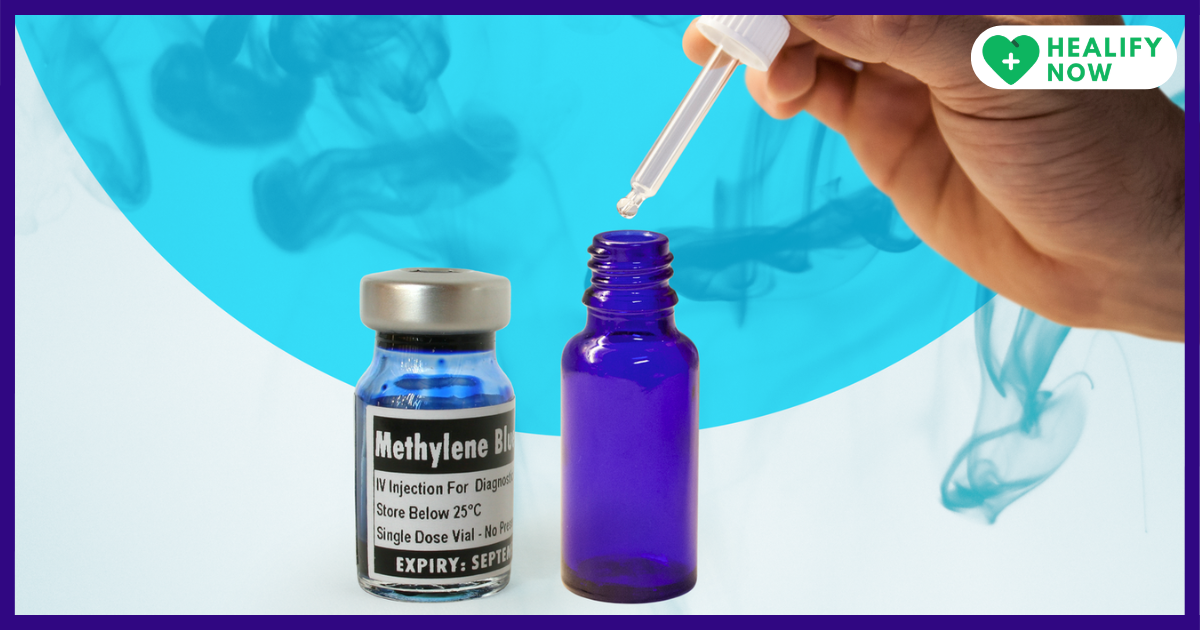
Methylene blue (methylthioninium chloride) is a synthetic dye and redox-active compound. It’s FDA-approved as an injectable treatment for acquired methemoglobinemia, a blood disorder that limits oxygen delivery. It’s also used in surgical and diagnostic staining and as an aquarium antifungal/antiparasitic treatment. Its “performance” reputation comes from its ability to act as an alternative electron carrier in the mitochondrial electron transport chain.
The Medically Established Benefits
These uses have solid regulatory and clinical backing:
- Treating methemoglobinemia. Methylene blue rapidly converts methemoglobin back to functional hemoglobin, restoring oxygen-carrying capacity in an emergency.
- Reversing vasoplegic shock. Used in ICU and surgical settings to raise dangerously low blood pressure that isn’t responding to standard vasopressors.
- Treating ifosfamide-induced encephalopathy, a neurological complication of certain chemotherapy regimens.
- Surgical and diagnostic dye. Used to visualize tissues, fistulas, ureters, and parathyroid glands during procedures.
- Antimalarial adjunct. Studied and used in some regions in combination with other antimalarials.
The “Performance” Claims: What Research Actually Shows
Much of methylene blue’s online popularity centers on claims about cognition, energy, and aging. Here’s the honest state of the science:
Mitochondrial function
In laboratory and animal studies, low-dose methylene blue can act as an alternative electron acceptor/donor in the mitochondrial electron transport chain, potentially reducing oxidative stress under certain conditions.
This is biologically interesting, but human clinical evidence for everyday “energy” benefits is very limited.
Cognitive and memory research
Small human trials and case studies (some in the context of Alzheimer’s-related tau research) have explored methylene blue’s effects on memory and brain imaging.
Results are mixed and studies have often been small, short, or industry-sponsored. It is not an FDA-approved treatment for any cognitive condition.
Mood and neuroprotection
Older psychiatric literature explored methylene blue at very low doses for mood disorders; this remains investigational, not a standard treatment, and is contraindicated with several common antidepressants (more below).
Antioxidant/anti-aging claims
Marketing sometimes stretches lab findings on oxidative stress into broad “anti-aging” claims. There is no human clinical trial establishing methylene blue as an anti-aging supplement.
Important Safety Context
Before considering methylene blue for any off-label purpose, understand that:
- It is a potent monoamine oxidase inhibitor (MAOI) and can cause potentially fatal serotonin syndrome when combined with SSRIs, SNRIs, or other serotonergic drugs.
- It is not FDA-approved as a dietary supplement or nootropic, and oral, non-pharmaceutical-grade products are not standardized.
- People with G6PD deficiency can experience severe hemolytic anemia from methylene blue.
- It’s contraindicated in pregnancy due to documented fetal harm in case reports.
Who Actually Uses Methylene Blue Medically
Physicians and anesthesiologists use methylene blue in hospitals for methemoglobinemia, vasoplegic syndrome, and as a surgical marker. Outside the hospital, unregulated “supplement” use has grown, but this is not the same product, dose, or oversight as clinical administration.
Bottom Line
Methylene blue has genuine, well-established medical benefits in emergency and surgical medicine. Its popularity as a cognitive or longevity supplement runs well ahead of the human clinical evidence. If you’re considering it for any reason beyond its approved medical uses, talk to a physician first, particularly if you take antidepressants, have G6PD deficiency, or are pregnant.
Frequently Asked Questions
Does methylene blue actually improve energy or focus?
Some small studies suggest effects on mitochondrial activity and short-term memory tasks, but the evidence in healthy adults is limited and not conclusive enough to call it an established “energy” or “focus” supplement.
Is methylene blue the same as the supplement sold online?
Pharmaceutical-grade methylene blue used in hospitals is FDA-regulated. Products sold as supplements are not FDA-approved for oral human consumption and are not subject to the same purity and dosing standards.
Can methylene blue help with anxiety or depression?
It is not an approved treatment for anxiety or depression, and combining it with common antidepressants can be dangerous. Speak with a doctor rather than self-treating.
Is methylene blue natural?
No. It’s a synthetic compound (a phenothiazine dye), not a plant-derived or naturally occurring substance.
How long has methylene blue been used in medicine?
Over 140 years — it’s one of the oldest synthetic drugs still in clinical use today.
Authoritative Sources
- U.S. Food and Drug Administration – Drug Safety Communications on Methylene Blue: https://www.fda.gov
- National Library of Medicine, MedlinePlus – Methylene Blue Injection: https://medlineplus.gov
- National Center for Biotechnology Information (NCBI Bookshelf/PubMed): https://www.ncbi.nlm.nih.gov